Nothing to Break the Light of the Sun
Tim Smith
Nothing to Break the Light of the Sun explores life on the prairies of North America. Photographer Tim Smith has spent 18 years documenting prairie and rural life including 16 years documenting the Hutterites; communal anabaptists who live apart from mainstream society in their own communities throughout western Canada and the northwestern United States.
Out of necessity, Smith has embraced the photojournalism adage "find stories in your own backyard." He is passionate about using time in long-term projects to create extra layers of intimacy and depth.
The exhibition unfolds in three sections.
The first section focuses on rural life on the Canadian prairies, where summers are short, hot and beautiful. Through photos of farming, powwow, summer fairs, rodeo and other pieces of the prairies, viewers get a glimpse into life in the middle of Canada, outside the big cities.
Section two showcases the beauty of community in Hutterite colonies, where members all work together for the good of the community. Smith's dedication to building relationships within these insular communities reveals the nuance and complexity of colony life.
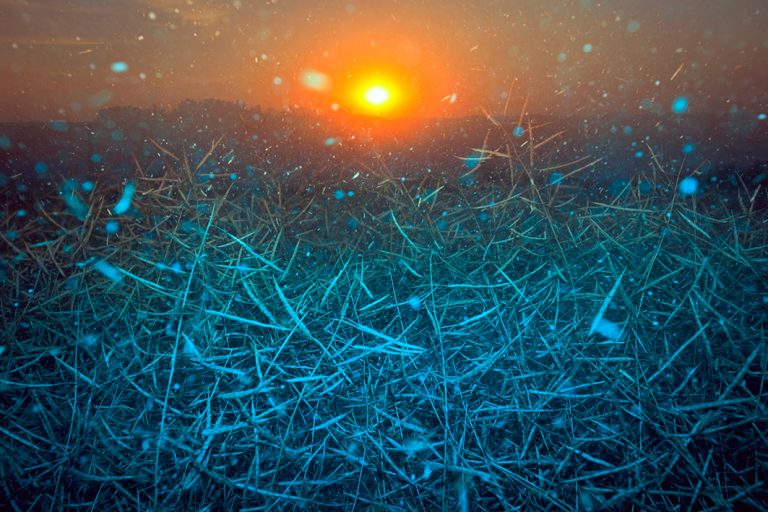
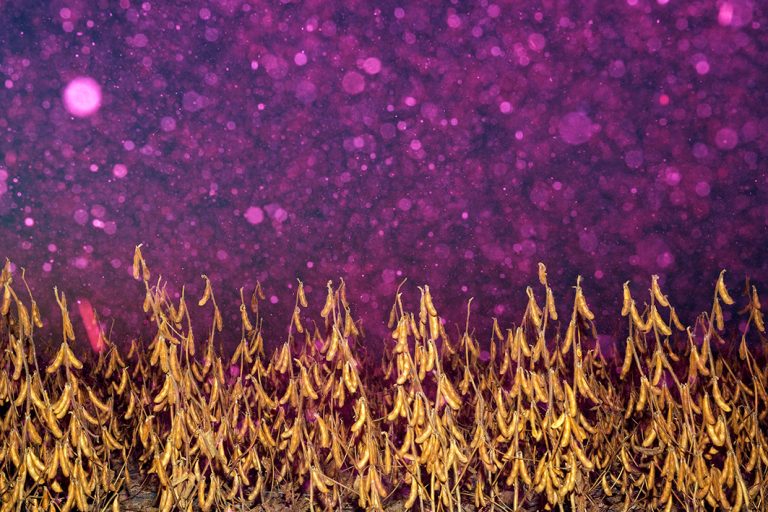
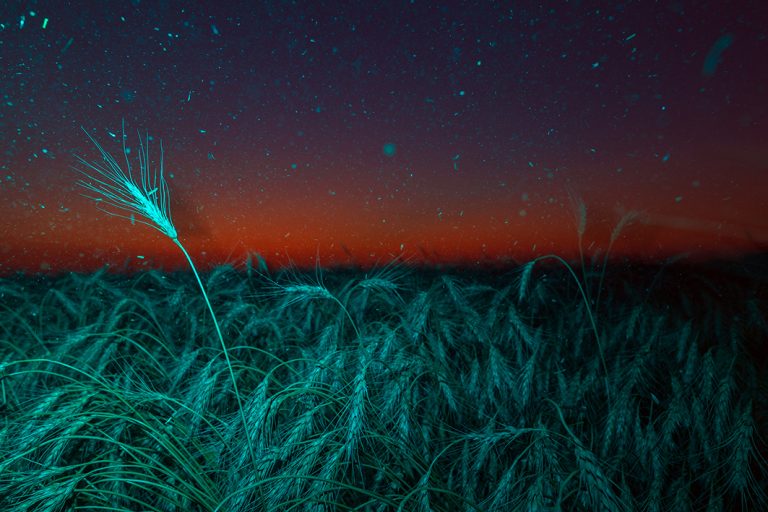
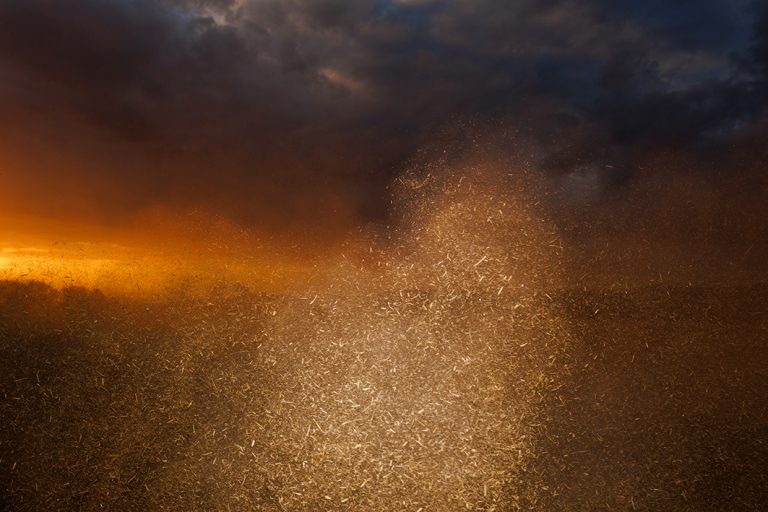
The third section, Chaff, centers on the chaotic beauty of harvest through gritty, colourful and detailed portraits of chaff - the discarded byproduct of harvested crops. These images are made through trips to the fields during harvest, where Smith becomes immersed in the dust, stalks, soil, and debris hurled into the air by the machines gathering the crops that sustain us.
In The World But Not Of It
The Hutterites, anabaptists whose roots trace back to the Radical Reformation, live communally on colonies throughout western Canada and the north-western United States. Their culture continues to be preserved through deliberate separation from mainstream society and economic self-sufficiency.
The Hutterites are currently in the midst of one of the most successful periods of their approximately 500 year history. Members are provided for throughout their entire lives and on the whole experience less of the loneliness and isolation prevalent in the modern world. Their belief in the importance of engagement in family life, social life and spirituality, and the defined purpose for their lives means Hutterite communities meet many of the requirements to be considered Blue Zones; area’s where health, happiness and life expectancy rates are higher than average.
The Hutterites believe that their separation from society offers them a better way to god, but their system also provides lessons in connection and sustainability that we can all learn from. Despite outside pressures, the Hutterites continue to be one of the most successful models for communal living in modern western history.
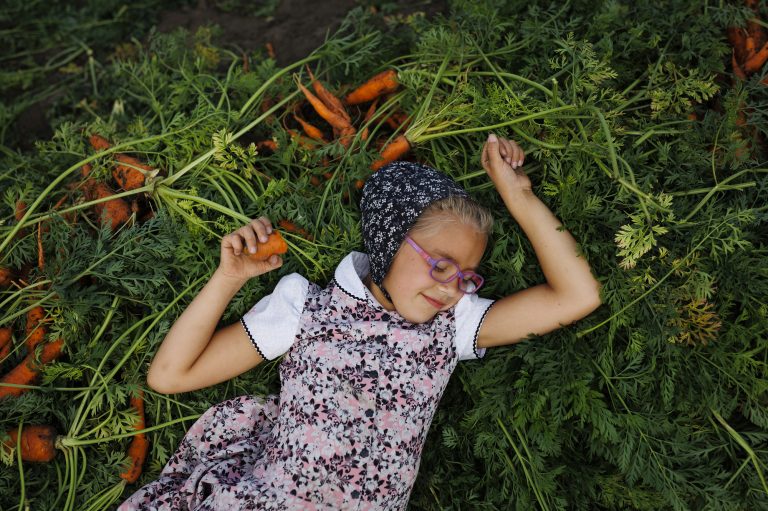 Kira in the carrots
POS TS 305 01
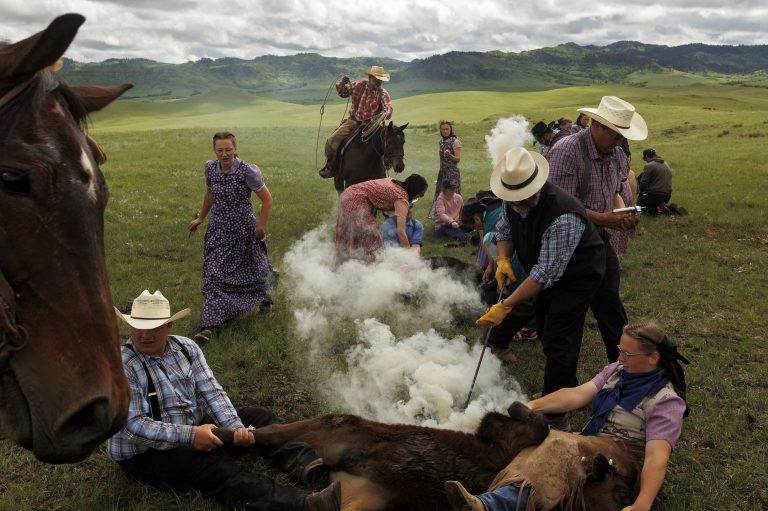 Branding at Forty Mile
POS TS 305 02
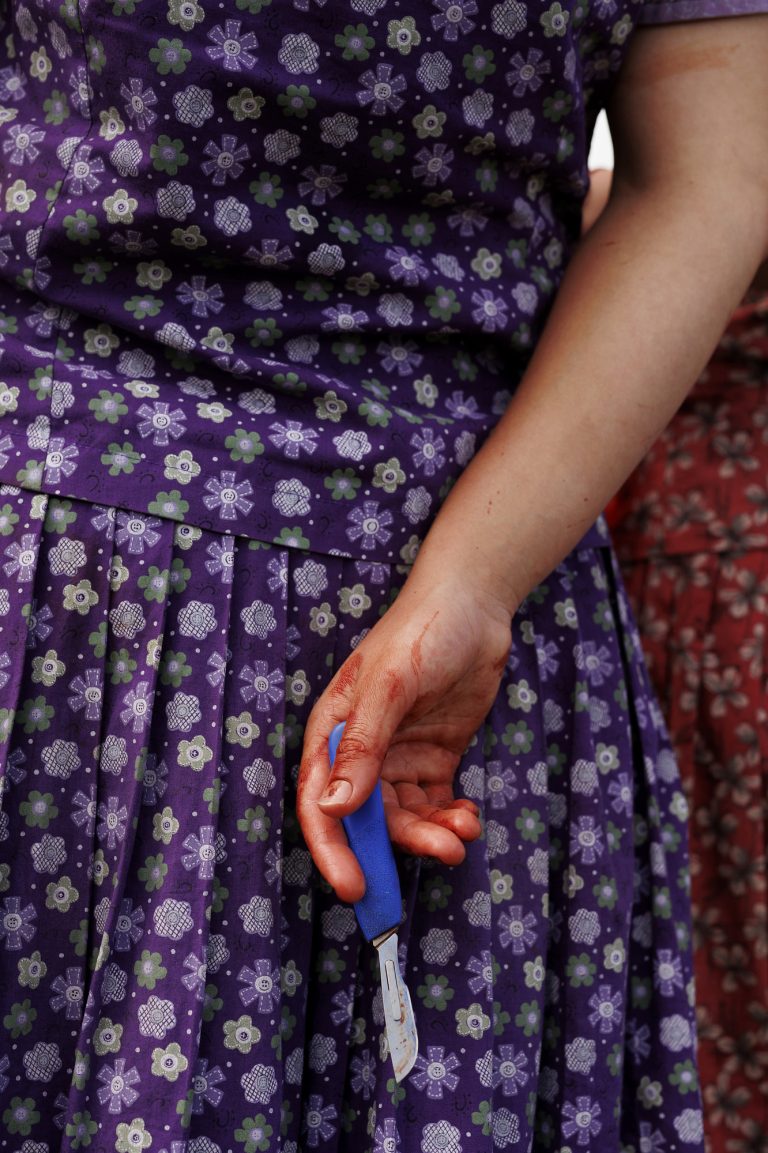 Dress and Scalpel
POS TS 305 03
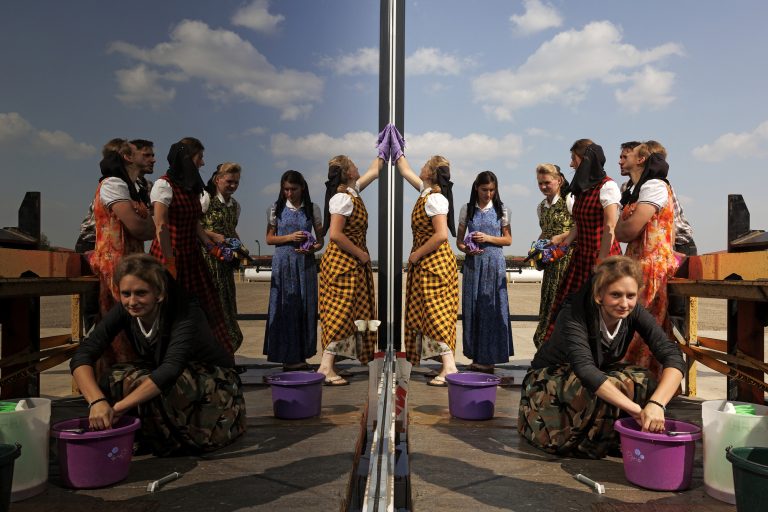 Window cleaning at CanAm
POS TS 305 04
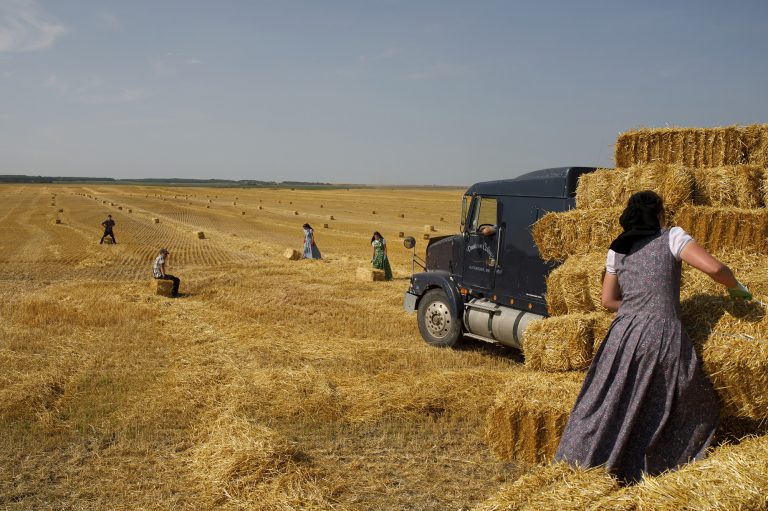 Hauling bales at Deerboine
POS TS 305 05
 Justin after butchering
POS TS 305 06
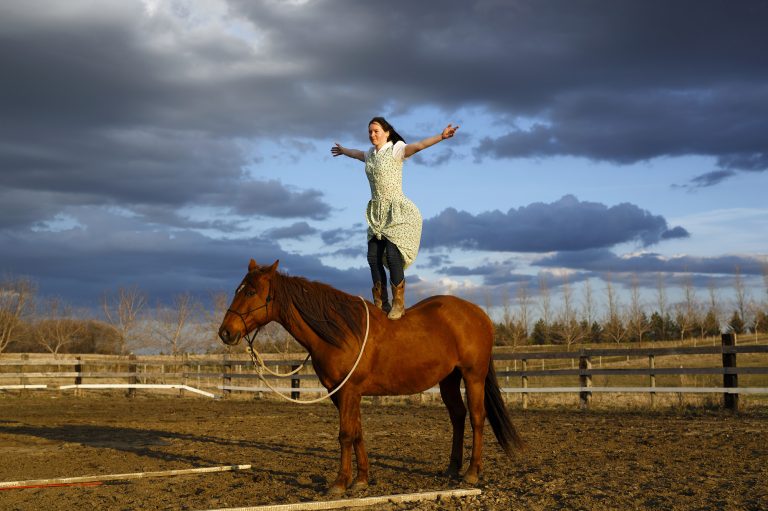 Kelly and Kia
POS TS 305 07
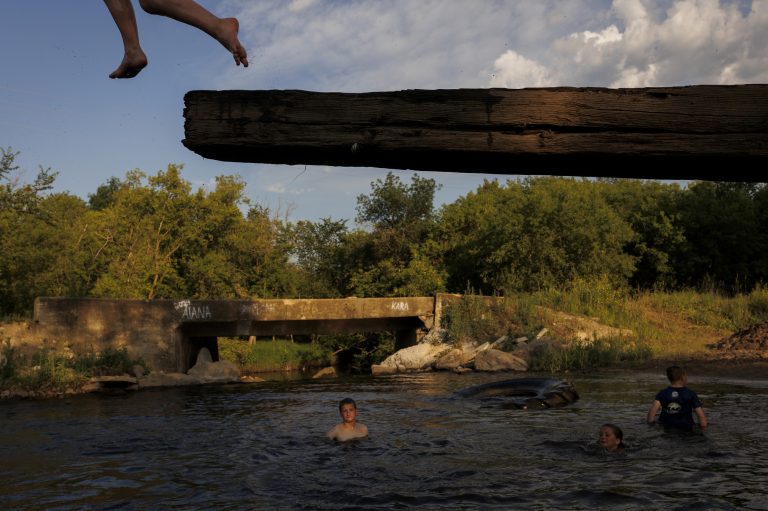 Pine Creek swimming hole
POS TS 305 08
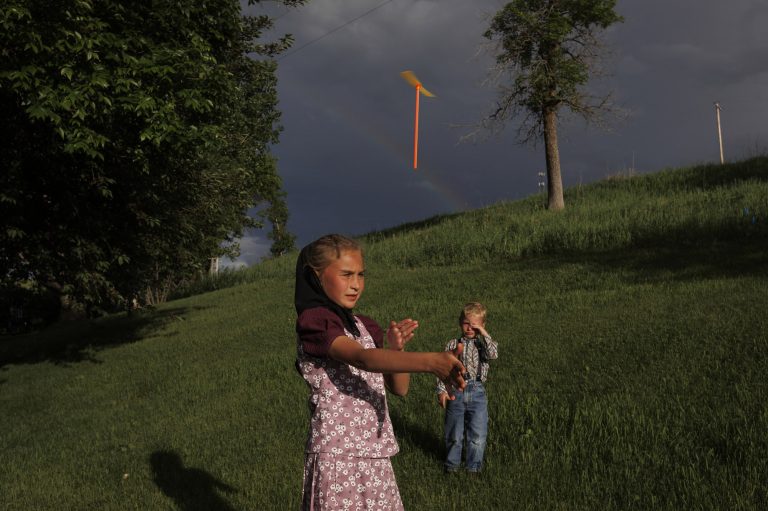 Last light at Forty Mile
POS TS 305 09
Nothing to Break the Light of the Sun
The prairies. Farmers. Cowboys. Sunsets. Watching your dog run away for three days. Nothing to see here but wheat fields. 1600 kilometres of unbroken flat, wedged between the Canadian shield and the Rocky Mountains. In the 19th century, the mental health struggles that afflicted many new immigrants to the prairies spawned the terms prairie madness and prairie fever. European settlers struggled with the isolation as well as the harsh weather and living conditions.
The prairies don’t get a lot of attention unless there is a natural disaster or a federal election, in which case politicians and big city journalists flood into the fields to find the true heart of Canada. Summer in western Manitoba is brief and beautiful but just long enough to wash away the collective memory of the brutal winter behind us and the impending one to come. There is an urgency to summer on the prairies. You are obligated to make the most of it.
 Birdtail Sioux Dakota Nation Powwow
POS TS 305 10
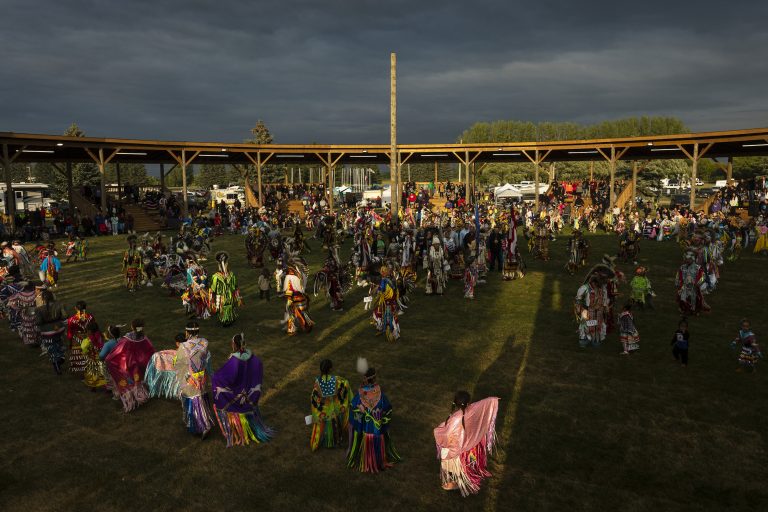 Sioux Valley Dakota Nation Powwow
POS TS 305 11
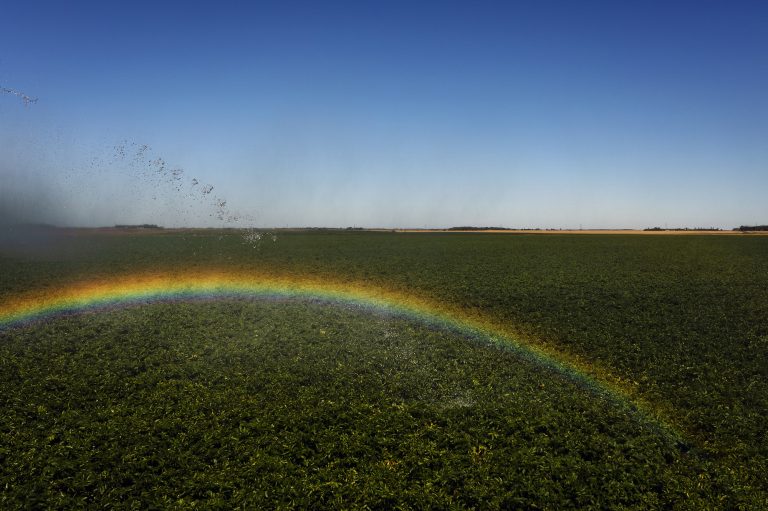 Pivot Irrigation Rainbow
POS TS 305 12
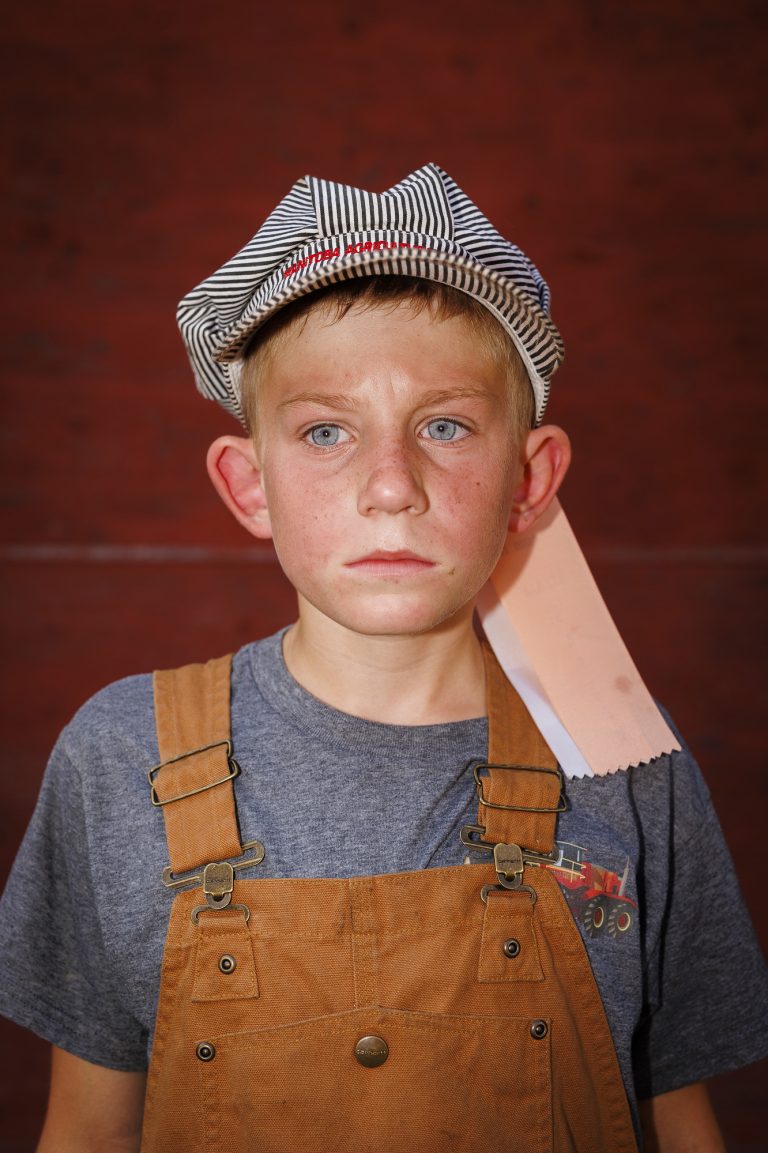 Steam engine operator
POS TS 305 13
 The Manitoba Summer Fair
POS TS 305 14
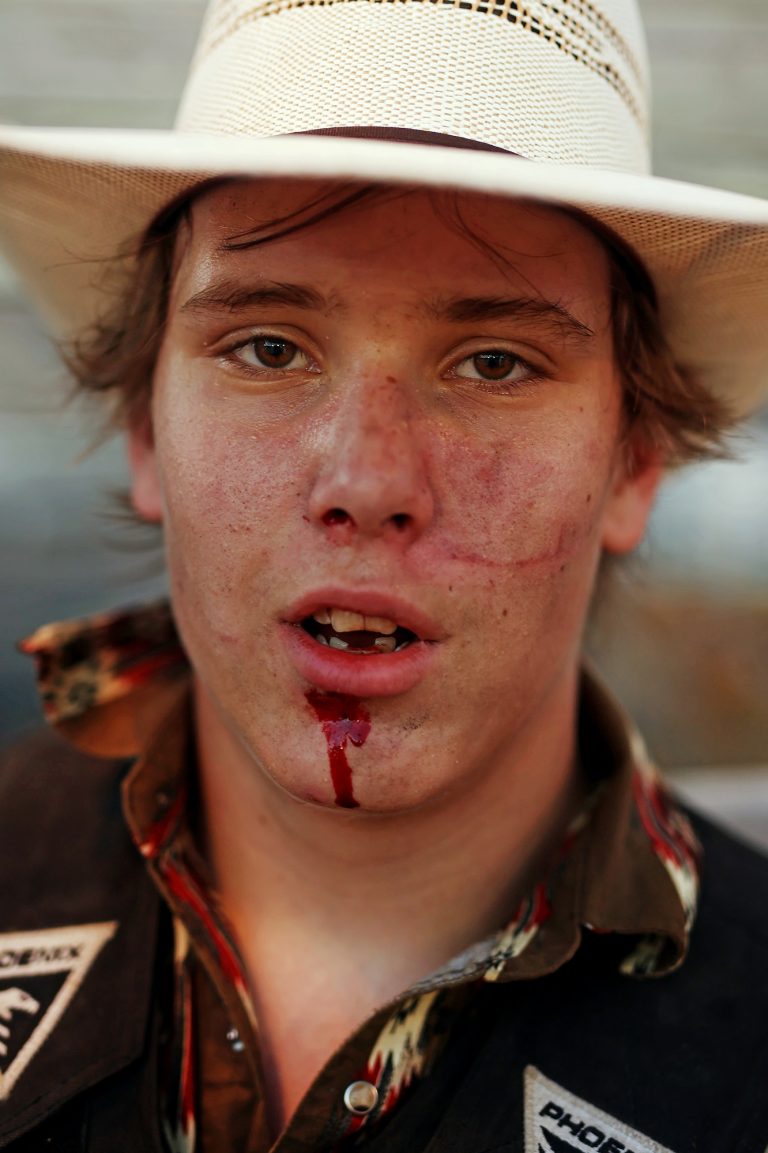 Threshermen's Stampede
POS TS 305 15
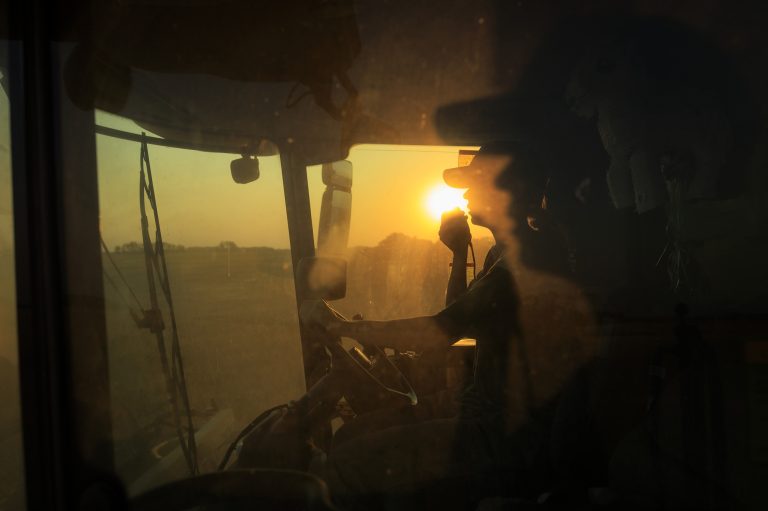 Combining barley
POS TS 305 16
 The North Dakota State Fair
POS TS 305 17
 Lucky horseshoe
POS TS 305 18
Chaff
Chaff explores the importance of farming and the frenzy of harvest with intimate photographs of the chaff, dust, stalks and other debris that are spit forth from the back ends of combines as crops are harvested on the Canadian prairies. The work both highlights the impact of human activity on the landscape and the chaotic beauty of harvest. The compositions and tones are heavily influenced by the landscape, the soil, the wide prairie sky and the light from the sun. As chaff is a disregarded byproduct of grain production and harvest, rural life and communities are often similarly ignored by North Americans who rely heavily on the physical and emotional labour of farmers. Chaff becomes a metaphor for the discarded and overlooked aspects of rural life.
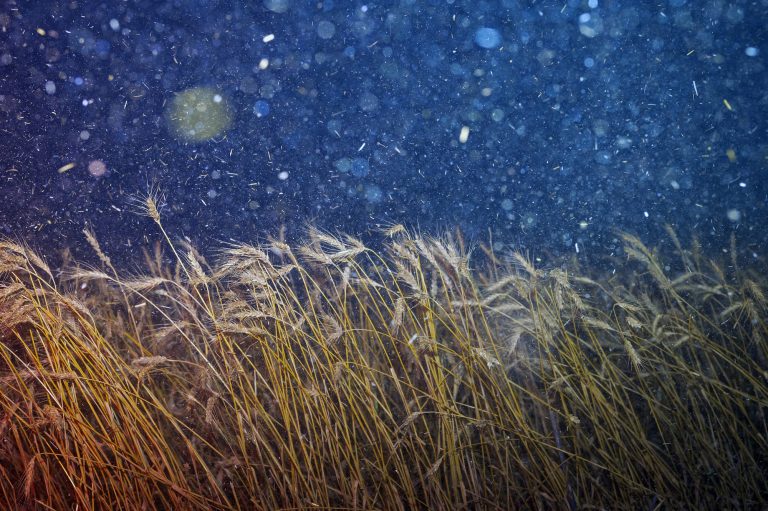 Wheat #10
POS TS 305 19
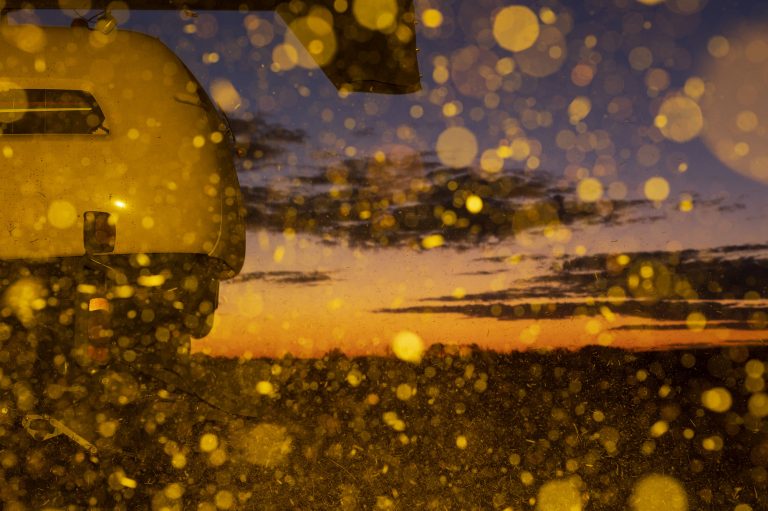 Canola #1
POS TS 305 20
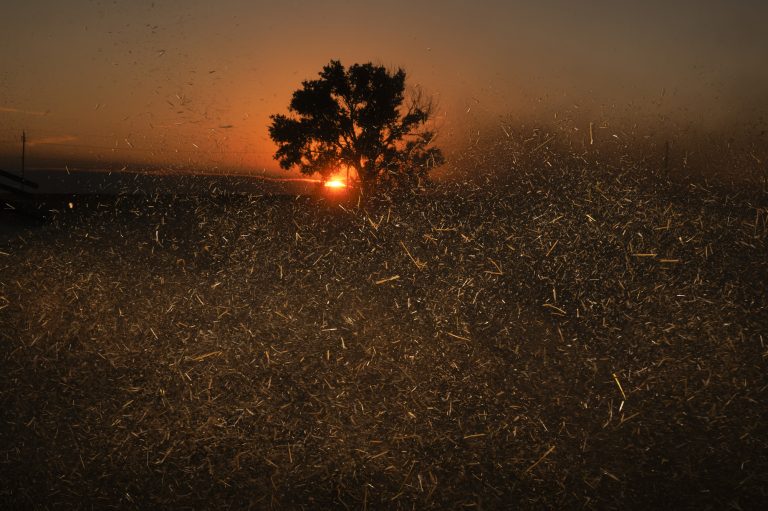 Wheat #15
POS TS 305 21
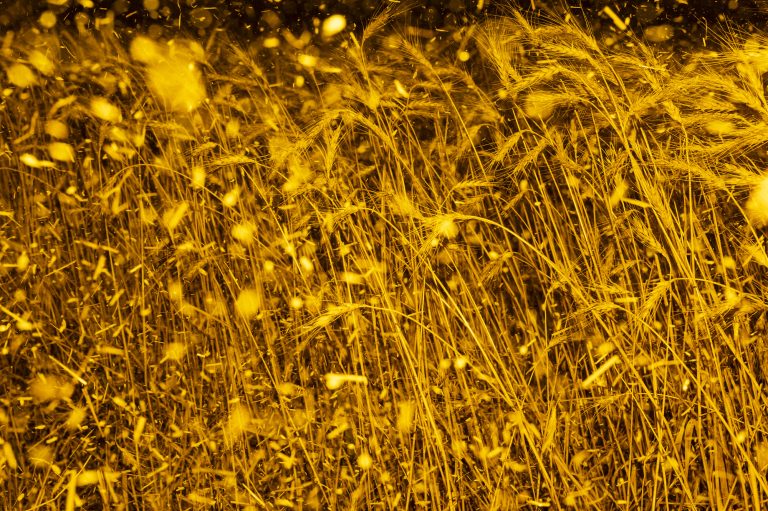 Wheat #22
POS TS 305 22
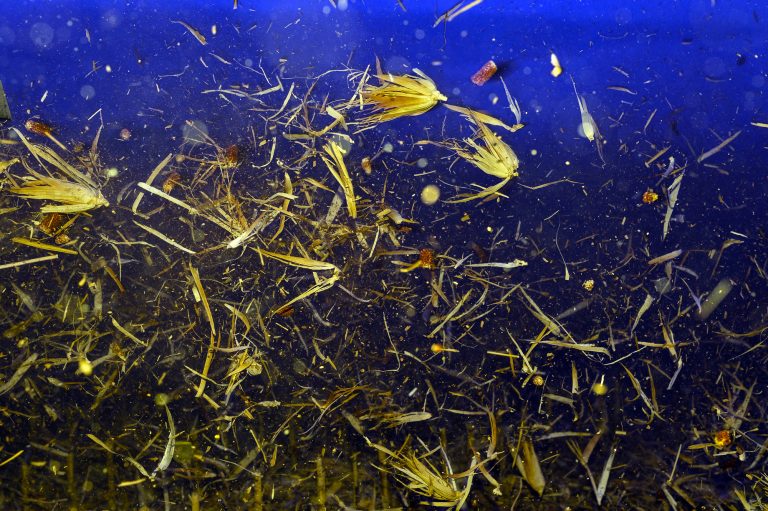 Corn #3
POS TS 305 23
 -
-POS TS 305 24
 -
-POS TS 305 25
 -
-POS TS 305 26
 -
-POS TS 305 27